Custom software vs off-the-shelf: how to make the right call
The default advice in most business contexts is to buy before you build. It's reasonable advice, grounded in the genuine reality that software is expensive to build and maintain, and that most problems have been solved before.
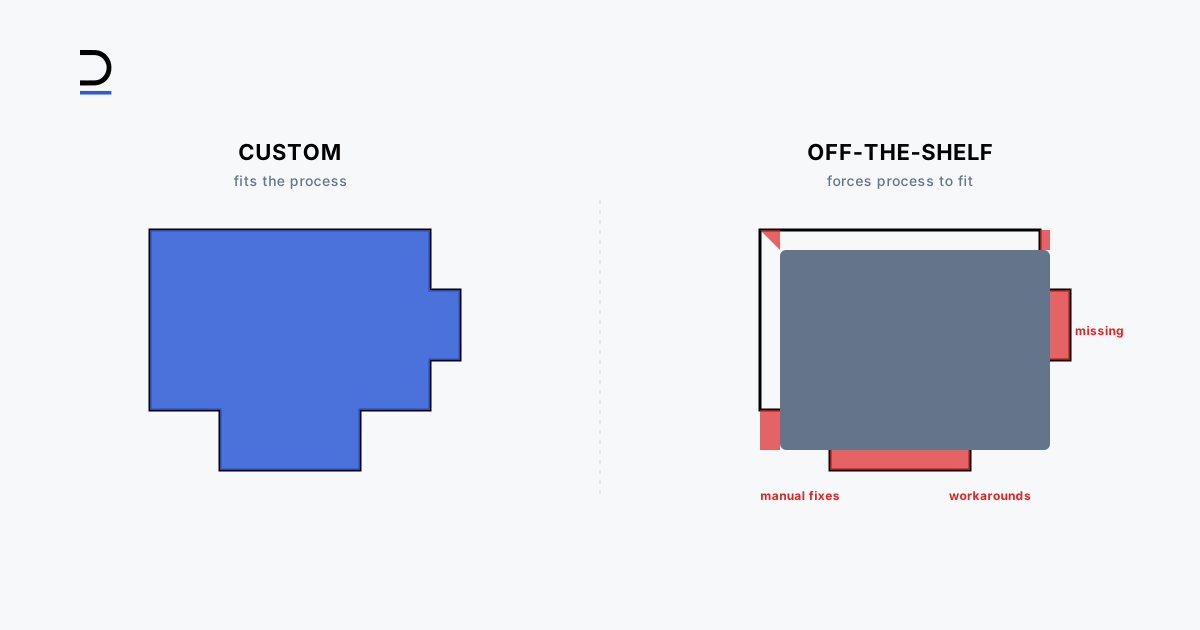
But the advice breaks down when the process you're trying to support is genuinely differentiated — when the way you do things is part of the value you deliver, and forcing it into a generic tool means either changing the tool (impossible) or changing your process (expensive and often counterproductive).
Here's the framework we use when clients ask us this question.
Start with the process, not the software
The first question isn't "does software exist that does this?" It's "how do we actually do this, and why do we do it this way?"
Off-the-shelf software is built around common patterns. If your process follows those patterns, you're in luck — you'll get a product that mostly fits, plus a community of users who've solved the same edge cases you'll encounter, plus ongoing development from a team that's invested in the product's success.
If your process doesn't follow common patterns — because your industry has unusual requirements, or because your competitive advantage comes from doing something differently — then you're in different territory.
The cost of adaptation goes both ways
When you buy software that doesn't quite fit, you adapt. You change your process to match the tool, you build workarounds for the things the tool doesn't do, and you accumulate technical and process debt over time.
This cost is real but often invisible. The workarounds become "how we do things." The gaps become accepted limitations. And when the business grows or changes, the accumulated debt becomes a constraint.
The reverse adaptation — changing the software to fit your process — is usually not available with off-the-shelf tools. What you get is what you get.
When to buy
Buy when the problem is genuinely generic. Accounting. CRM. Project management. HR. These problems have been solved well by products that have had years of investment and iteration. Unless your accounting process is genuinely unusual (and it probably isn't), custom accounting software is a distraction.
Buy also when your process isn't yet defined. If you're still figuring out how you want to do something, starting with an off-the-shelf tool gives you a low-cost way to discover your requirements before you invest in building for them.
When to build
Build when your process is genuinely differentiated and the differentiation matters to your customers. Build when integration requirements are complex and the off-the-shelf options handle them poorly. Build when the total cost of adapting your process to available tools exceeds the cost of building the right tool.
And build when you've already tried the off-the-shelf route and it didn't work — not because the products were bad, but because your requirements genuinely don't fit them.
The AI factor
AI has changed the economics of custom software substantially. A bespoke internal tool that would have cost $150,000 and six months two years ago can now be built in six weeks for a fraction of that cost. This shifts the buy/build crossover point meaningfully.
It doesn't change the decision framework — it just makes the "build" column more competitive for problems that previously would have defaulted to "buy" on cost alone.
The right call is almost always context-specific. The businesses that make the worst decisions are the ones that apply a blanket rule — always build, or always buy — rather than thinking clearly about fit, cost, and what's actually differentiating about their operations.
Start with the process. Work backwards from there.